

Home schoolers say Minister’s crack down unfair, unwarranted
Home schoolers say a last minute education law amendment which would significantly scale up oversight of home schooling has unfairly tarnished the 11,000 students in the sector by linking it with Gloriavale.
Minister of Education Erica Stanford added several amendments to the Education and Training (System Reform) Amendment Bill on Tuesday May 19, after the select committee stage and second reading in Parliament.
One of these was to create legally binding requirements for exemptions from enrolment in a registered school (required to home school a child), to maintain an exemption, and regular reporting, “and any other necessary requirements” by home school families.
It is expected to be pushed through to a third reading on Wednesday, before the Budget on Thursday, and implemented from July 1, 2027.
Current legislation requires home schooling families to teach children “as regularly and as well as” they would be at a registered school, but there is no requirement to use the New Zealand Curriculum.
Stanford told TVNZ “the thing that sparked this urgent work on our part to protect children was the Gloriavale cases and the fact that the Education Review Office (ERO) wrote to me with serious concerns about the broader system.”
A regulatory impact statement (RIS) said there was currently no visibility of the home schooling sector, with exemptions from enrolment not reassessed after being granted and reviews only conducted in response to complaints.
The budget for reviews of home schoolers by the ERO was scaled down from provision for 500 a year to about 10 per year, from 2009.
The RIS said recent reviews by the ERO found significant concerns including: little evidence of consistent daily engagement; insufficient curriculum breadth and depth, with no or minimal provision in some key areas; insufficient assessment and no way to evidence progress, with particular concern about writing and literacy; learning environments that are not fit for purpose and safety and wellbeing risks.
However, Cynthia Hancox, spokesperson for the National Council of Home Educators, said the concerns raised by the ERO were largely related to a special review of 103 home schooled children from 28 families at Gloriavale, requested by the Secretary for Education Ellen MacGregor-Reid in September 2025.
On March 16 ERO chief executive Ruth Shinoda wrote to MacGregor-Reid with a report finding that “of the 103 children’s home school provisions reviewed, 96 were judged as not being taught at least as regularly and as well as in a registered school”.
“The remaining seven children have been classified as too early to judge due to exemptions being granted recently (within 3-4 months).”
Recent revelations by the New Zealand Herald that Tom Phillips had been granted exemptions to home school his three children, have put a spotlight on the ministry’s role in managing exemption applications and home school education provision.
Hancox said the Gloriavale findings, and the Tom Phillips case were being used to tarnish the whole homeschooling community.
“Who would suggest that Gloriavale is a reflection of any other community and home educators in particular?”
She said the ERO could do additional monitoring within the current legislative framework but this had been reduced in the past due to “budgetary constraints”.
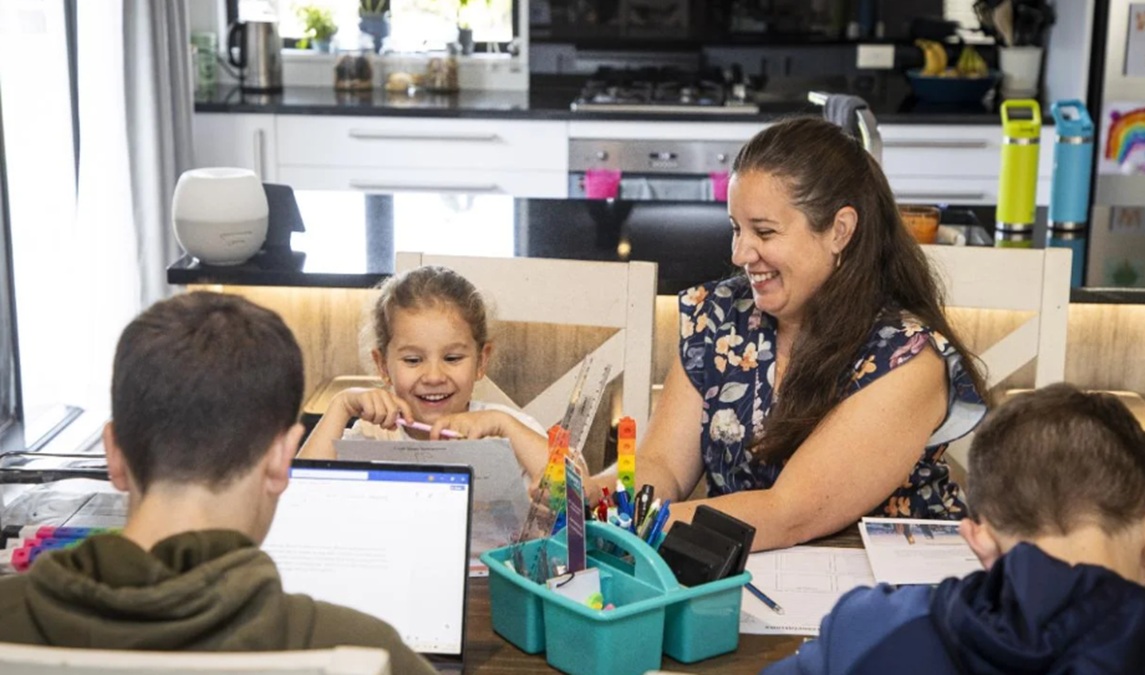
Rolleston mother Vanessa Camoin started home schooling her eldest son, who is now 14-years-old, after seeing him struggle at school due to undiagnosed autism and ADHD.
“Within six months I could see a massive change in him. He would go ‘can I start learning mum?’.”
She wanted her second son to attend school. However, it became clear he had dyslexia and was not receiving the help he needed.
“I never had anything against the school, I never had anything against the teachers or anything, I just thought, ‘okay, I’m going to take this one step at a time and see how it goes’.”
When her daughter turned five, Camoin decided to home school her too. “After seven years of doing this, I’ve fallen in love with homeschooling.”
She said home schooling families were not opposed to reporting and monitoring, but they felt locked out of the discussion and misunderstood.
“There’s so many parents out there that are doing everything they possibly can for those children and then to see the words about ‘protecting children’ and they’ve got ‘serious concerns …’”
“Are we all under that same Tom Phillips umbrella? You know, that is not fair.”
Ministry General Manager, Learner Success & Tiriti Policy Sela Finau said concerns among the sector will be considered before regulations are finalised.
“We recognise that home-educating families often take different approaches from those used in schools, and this will be reflected in the design of any reporting or assessment requirements. Consideration will also be given to the individual needs of students, including those with disabilities or who are neurodivergent.”
The Minister was approached for comment.