

New documentary shows life inside Gloriavale
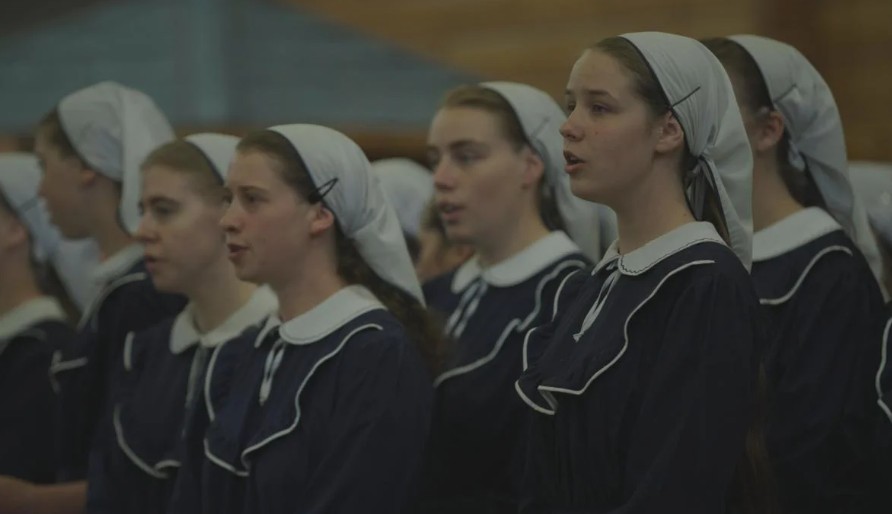
Dame Julie Christie’s new documentary Devotion takes us inside daily life at Gloriavale, but should it?
How many rotten apples does it take to spoil the barrel? One? Two? 22? It’s a big question. Especially because that last number is how many men from the small religious community of Gloriavale have passed through the courts for sexual and violent offending since 2017.
It is also the question that Dame Julie Christie’s new three-part documentary Devotion: The Gloriavale Story purposefully does not answer.
“I want the viewers to make up their own mind,” she states. “And I wanted them [the residents of Gloriavale] to have their chance to tell us how this happened, why this happened, what they lived for, and how they’re going to live into the future.”
Since its formation in 1969, the controversial South Island commune has faced intense scrutiny due to a string of abuse allegations and convictions. The first was against its founder, Neville Cooper, who changed his name to Hopeful Christian, setting a trend for inspiring aspirational names within the sect, and then against various members, including Cooper’s successor. There have also been court rulings against its leadership regarding its multi-million-dollar business dealings.
Where Devotion differs from other documentaries on the group is that Christie and her cameras were welcomed into the flock. It took her months to gain their trust, but she won them over and embedded herself into Gloriavale’s daily life for three weeks.
If you removed all the prayer, matching outfits and happy-clappy sing-alongs, I have to admit the documentary makes life there look pretty good. Christie presents a community in the truest sense of the word, one you can’t help but feel has almost disappeared in our hyper-connected, digital-focused, don’t-know-your-neighbour world.
Groups of happy kids run around outside against the grandeur of the isolated West Coast backdrop, and we see people supporting each other and truly working together for the greater good. We see them baking bread and, perhaps surprisingly, using recent model smartphones.
“When you arrive, you can absolutely see why 520 people still choose to live there,” Christie says. “You don’t have to worry about your household, your food, your phone bill, your cost of living.”
Your kids? Well, you can make up your own mind about that.
While Christie withholds judgment, everyone else involved in Devotion is happy to pass it.
There’s Brian Henry, the lawyer representing former Gloriavale members, who damns the place to hell. There are husbands and wives who, depending on your view, have either left or escaped.
And last but not least, there are around 25 Gloriavale residents themselves, ranging in age from teen to elderly, who all put their faith in Christie by volunteering to be interviewed for the documentary. Christie asserts that no topic was off the table.
“They’re not in denial about what’s happened,” Christie says. “In fact, [their] leader Stephen Standfast said to me, ‘There’s no telling our story going forward without us facing up to the past’. They face up to the fact that they have made some big mistakes with the way they’ve treated survivors and the way that they let perpetrators back into the community. We’ve heard a lot from the victims or survivors, but it was their time to face up to the past and talk about the future.”
To hear them say it, there have been big changes in Gloriavale. Lessons have been learnt. Preventative steps have been taken. Crimes and abuses have been acknowledged. And there has been the realisation that they and their beliefs are ill-equipped to handle such serious issues internally in the future.
Facing ongoing lawsuits, verbal abuse in the streets, sustained media coverage and the existential threat of Gloriavale being closed down and members finding themselves homeless, this is seen as their chance to show you that the rotten apples have been cleared out of the barrel.
“To me, they are paying for the sins of their fathers. Still,” Christie says. “You have to understand, 520 people still want to live there. That’s really important. It’s a very, very different place under Stephen Standfast than it was under Neville Cooper, in regards to personal freedoms, religious freedoms and how integrated the people are with the community.”
Devotion: The Gloriavale Story goes inside the commune in a way others haven’t. But should it have?
“I felt overwhelmingly it was time that they not only told their story, but also faced up to the past and told New Zealand what they’re doing about this and what they’re doing to ensure the children’s safety,” she explains. “That was the idea. We did ask the police to answer, and the police declined.”
The documentary also declines to provide an easy answer, but I wonder if Christie might. I ask the question simply: Is Gloriavale a cult?
“Hmm,” she replies.
I press on, saying, “Because that’s the big question, isn’t it? Everyone says it’s a cult. Do you think it’s a cult?”
There’s a second of silence, then Christie gives her answer.
“I’m not sure what it is,” she says.