

Gloriavale’s Education
It was disturbing to read Ariana Stewart’s report (Greymouth Star, June 9) on the treatment of the Gloriavale homeschooling community and the role played by the Education Review Office in its assessment of those students.
The article raises serious questions about the way ERO has approached this community and whether its findings have been used to justify the introduction of further requirements and restrictions on homeschooling families throughout New Zealand.
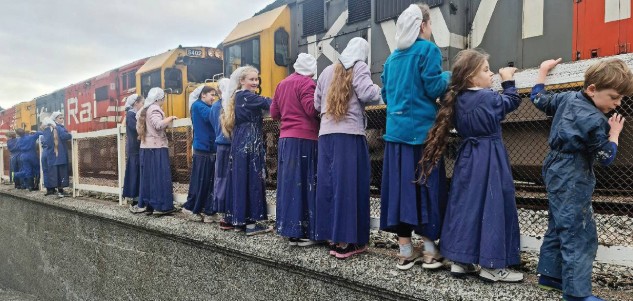
I would like to place on record my own experience with the Gloriavale homeschooling community during preparations for the 2023 Otira Tunnel Centenary commemorations.
When a call went out to all schools on the West Coast for students to help decorate the 1921 subway at Otira in time for the celebrations, van loads of children from Gloriavale travelled to the site over several months.
Accompanying them were adults providing supervision and guidance. Trailers arrived carrying firewood and wood cookers. Vans brought cooked food, soup to be heated on the cookers, hot chocolate, cakes, fresh fruit, juices, tables, chairs, paints, brushes, designs and art materials.
Large ground covers were carefully laid over the concrete to prevent paint spills. Trestles, equipment, and buckets of water were carried into the subway. Over the course of the project a wide range of artistic skills emerged, and an impressive collection of artworks took shape.
Babies, parents, teenagers, primary-school-aged children, and grandparents all participated. Together they demonstrated co-operation, responsibility, pride, generosity, and a commitment to contributing to their community.
The experience provided a practical lesson in caring, sharing, creativity and service.
The people I encountered were polite, helpful, engaged and generous. I was not alone in forming that view. Numerous people involved in the centenary preparations commented on how polite, cheerful, respectful and well-schooled the children were. Their behaviour consistently reflected positively on both their families and their education.
The legacy they left behind remains visible today, and many still return to walk through the subway and acknowledge their contribution to a significant piece of local history.
As a former teacher and lecturer, I can confidently say that the children I observed were most certainly being “taught at least as regularly and well as” their peers elsewhere. Indeed, the skills, attitudes, organisation, creativity, and community spirit displayed throughout the project provided compelling evidence of a rich and effective educational environment.
Diane Gordon-Burns
Otira