

Former Gloriavale member says new documentary misrepresents community
| NZ Herald | Mitchell Hageman |
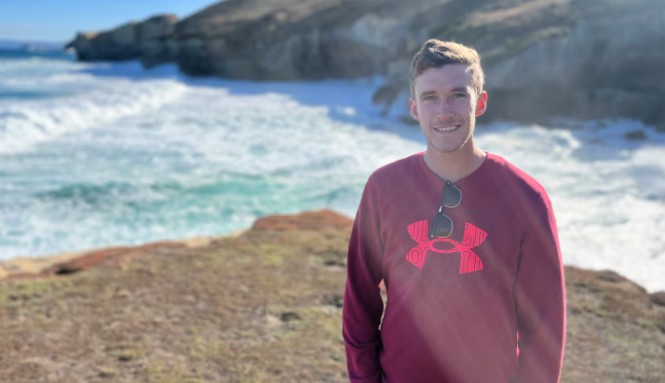
At 19, Dan Nicholson and his family left the controversial religious community and never looked back. He tells Mitchell Hageman his story, and what he believesDame Julie Christie’s new documentary got wrong.
A former Gloriavale member believes a new documentary was unnecessary and did not accurately portray the reality of life inside the Christian community.
Daniel Nicholson, who was born into the community and left when he was 19, says there is “no need for elaboration” when it comes to Gloriavale.
Now 25, he wants viewers of Devotion: The Gloriavale Story, screening on Three in New Zealand, to be wary, encouraging them to do their own research instead.
Gloriavale has been subject to a history of police raids and operations relating to sexual abuse allegations stretching back to the 90s. Community founder Neville Cooper, known as Hopeful Christian, was jailed for indecent assault against young women, as was former leader Howard Temple.
Born Daniel Pilgrim on the grounds of the West Coast commune, Nicholson is Cooper’s great-grandson.
“Hopefully, the apple falls a long way from the tree,” he says.
The catalyst for leaving the community was complex. Nicholson and his family started reading more about Christianity and realised the values of Gloriavale did not align.
“I tended to think for myself a lot more than everyone else … I’d ask why things were the way they were.”
His dad, at the time a high-ranking Shepherd, wrote a letter to the other Shepherds saying he was concerned about what was happening.
“They essentially didn’t even read it, and said you either drop this or leave.”
So they did.
Like many other leavers, Nicholson has seen the three-part documentary series that has screened on Three over the past three nights.
The series, produced by Dame Julie Christie and NHNZ Internationals, features interviews with individuals within and outside the Gloriavale community, alongside exclusive access to 50 years of archival footage from within the community.
A press release for the documentary claims it “present[s] a breadth of perspectives, allowing audiences to engage with the material without editorial commentary”.
“The documentary presents interviews from a wide range of people both inside and outside of Gloriavale. It aims to provide viewers with a range of perspectives and to allow them to draw their own conclusions,” a Three spokesperson says, adding that before broadcast, they undertook due diligence in relation to the documentary and its participants to make sure it met BSA requirements.
“As with any documentary dealing with complex and often deeply personal experiences, viewers may hold differing opinions. We respect those views and encourage audiences to engage with the full series and make their own informed assessment.”
Nicholson and other former Gloriavale members were “very disappointed” with the documentary.
“There’s definitely a strong sense among leavers that they kind of misrepresented the facts and made it out to be quite different to what it is, and gave these people a platform to say whatever they wanted to say and then not have it followed up with the facts of the situation,” Nicholson says.
“In the doco, they said the media has this narrative that they’re pushing or this narrative they’re spinning. When it comes to Gloriavale, it’s that crazy that there’s no need for elaboration. This stuff is real, and it happens.”
He says people watching the documentary series should look widely for information on his former community.
“Balance it with everything else that you’ve seen when it comes to Gloriavale, because there are better documentaries that are a lot more accurate, and there are great articles and stats that can’t really be denied. You’ve got to do your homework before forming an opinion.”
Virginia Courage, another leaver, told cult awareness group Decult the documentary gave Gloriavale “a PR platform to whitewash itself”.
“Gloriavale are obsessed with their own image and will use any opportunity to be the ‘saviour’ or ‘victim’. If people watching this doco are not aware of these techniques, they will struggle to know what is correct.”
Nicholson says he thinks the documentary became a platform to essentially normalise the community’s concerning behaviours. “Loaded terms, half-truths, and lies” are among the things he picked up.
“It was so frustrating. I felt like pausing it and talking back and saying, ‘that’s not right here’.”
Nicholson still has family living in Gloriavale who he’s tried, unsuccessfully, to visit.
“I’m not very welcome, obviously, but it’s definitely not like they portrayed in the doco,” he says.
“The last time I went in there to see my sick grandma, I was told by Howard [Temple], ‘you’re never welcome here ever again’. That’s the reality, and the doco is miles apart from that.”
Now living in Timaru and working as a stonemason and business owner, Nicholson has also been part of an employment court case that has ruled he and other children were subject to child labour and worked in dangerous conditions. It was his intention to help give those who were wronged a voice.
He recalls long days at the rendering factory shovelling offal and having to scramble into the coal hopper as it was filling.
“You were kind of seen as a problem until you were an asset, and then once you’re an asset, then they can shape you and see you as one more body in the workforce,” Nicholson says of his upbringing.
“I was an employee from the age of 6. You started school in the morning, and it’s work in the afternoon, and then Saturdays, it’s just a full day of work.”
Nicholson is worried the documentary could lead people astray as to what the reality of the situation actually is.
To date, over 20 men connected or linked to Gloriavale have been charged with or convicted of sex offences, according to previous Herald reporting.
“On the sex offending front, the documentary made out like there’s been one or two incidents, which just isn’t the case. You’ve only got to read some of the police reports from investigations that they’ve had. These issues are systemic. There’s been hundreds and hundreds of lives that have been negatively affected by that,” he says.
Another issue, says Nicholson, is that any apology that has ever been made by the group has been directed towards the media and the public.
“[The documentary] kind of tried to frame everything as oh, it’s just our way of life, and everyone needs to leave us alone. We’ve got it all worked out now. They massively minimised the systemic issues that are going on there.”
On the outside, Nicholson has found a welcoming new church community, a loving partner. He tries to give back, starting an online food store called Farm and Sea for people looking for alternatives to ultra-processed supermarket food. A recent activation in June gave a percentage of the proceeds towards helping people who have left Gloriavale at the Gloriavale Leavers Support Trust.
“It’s always been in my heart to find some way to give back,” he says, adding it was eye-opening to see how generous people outside the community were after his family left Gloriavale.
Mitchell Hageman joined the Herald’s entertainment and lifestyle team in 2024. He previously worked as a multimedia journalist for Hawke’s Bay Today.