

Another Court Win! Gloriavale Leavers Succeed in Judicial Review Against Labour Inspectorate
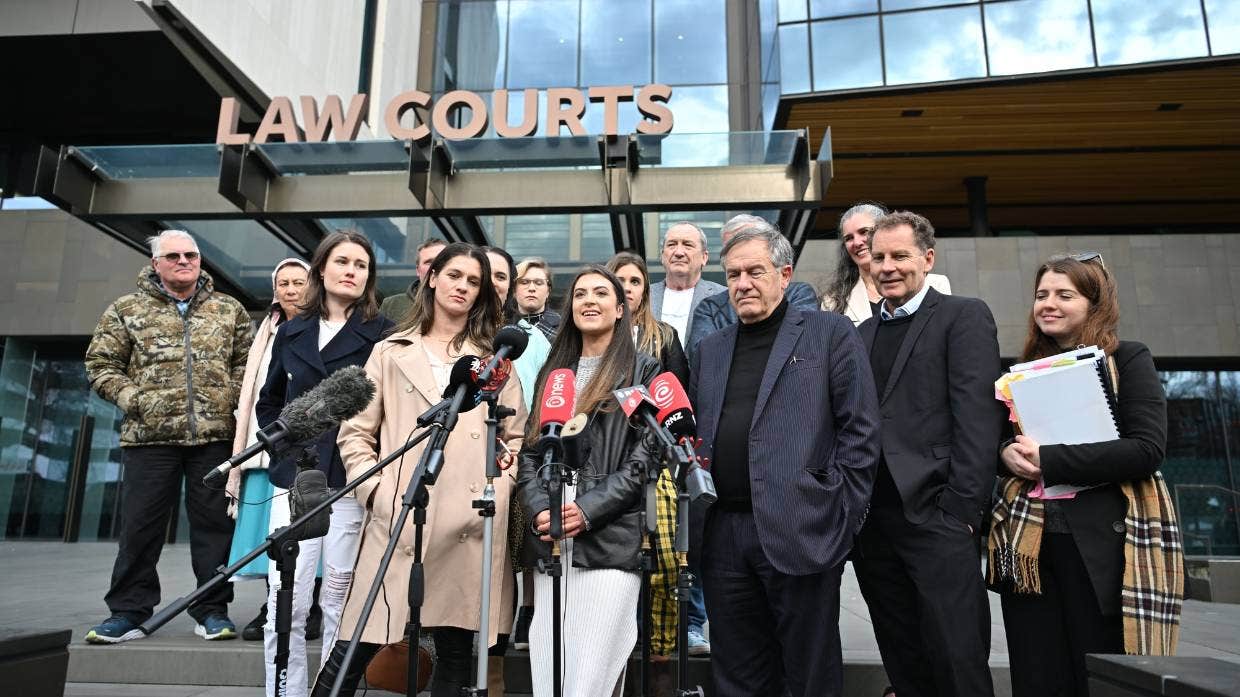
Another significant court victory for Gloriavale Leavers. The Employment Court has found the Labour Inspector made “numerous reviewable errors” in its handling of concerns about work and workers at Gloriavale.
Summary: What the case was about
Nine former Gloriavale members (plaintiffs in the Courage and Pilgrim proceedings) asked the Employment Court to judicially review the Labour Inspectorate’s handling of the 2017 and 2021 investigations. They challenged the Inspectorate’s decision not to properly investigate following its 2017 desktop inquiry, its decision to exclude children from the 2021 investigation, and its ultimate decision not to investigate further or take enforcement action against Gloriavale.
They claimed the Labour Inspectorate’s decision-making was legally flawed on multiple grounds, including errors of law, taking irrelevant considerations into account, failing to consider mandatory relevant matters, irrationality, manifest unreasonableness, and failures of fairness.
In this judgment, Chief Judge Christina Inglis upheld their judicial review application, finding that the Labour Inspector had made “numerous reviewable errors”.
She stated it misunderstood its legal powers, took irrelevant considerations such as disruption to Gloriavale into account, failed to properly consider and investigate child workers, and made decisions that were “manifestly unreasonable”, “unreasonable and irrational.” It also failed to adequately test evidence, pursue further inquiries identified by Crown Law, or properly grapple with evidence of control and duress within Gloriavale.
The Chief Judge emphasised that these were not inconsequential regulatory decisions as the case was placed within a broader human rights context, noting it involved “forced child labour, workplace abuse and servitude.” Allegations of child labour had “profound implications for those impacted” and “the stakes were very high”. In those circumstances, she said the Labour Inspectorate was required to take a “protective, rather than hands-off, approach” and referred to New Zealand’s international obligations concerning forced labour, child slavery and exploitation.
Judge Inglis used these words throughout the judgment:
· “manifestly unreasonable”
· “irrational”
· “inexplicable”
· “no satisfactory explanation”
· “error of law”
· “misunderstanding of the law”
· “numerous reviewable errors”
· “plainly relevant factor”
· “not a reasonably available option”
· “without good reason”
· “failed to adequately inform themselves”
· “large red flag”
· “loud alarm bells ought to have been ringing”
· “unattractive and cannot be accepted”
· “not complied with”
· “the decision-making process has … misfired”
· “hands-off, approach”
Remedies Sought
Among the remedies they sought were orders quashing both reports, damages, and declarations relating to slavery and servitude. The question of final remedies remains to be determined in a further hearing.
Plaintiff Serena Pilgrim Speaks to Cult Chat about the Judgment
Pearl Valor Speaks to Newstalk ZB
Pearl Valor spoke to Heather Du-Plessis Allan on Newstalk ZB about the judgement. Listen up here.
Background details & Context
The Labour Inspectorate’s involvement with Gloriavale began after Charities Services undertook a review of Gloriavale from 2015, with its final report completed in late 2016. Serious concerns arising from that work, including concerns about work being undertaken by children, were passed to the Labour Inspectorate. The Inspectorate was provided with Charities Services’ report and supporting material concerning Gloriavale’s working arrangements.
The Labour Inspectorate’s response was to conduct what it called an initial “desk-top inquiry” in 2017. It reviewed documentation, including paperwork from Gloriavale eg Partnership Agreements and What We Believe, but did not visit Gloriavale or interview current or former members.
In the 2017 report the Labour Inspectorate notes that if residents were employees, there would
“inevitably be many serious breaches of employment law”, and acknowledged that that “consideration would have to be given to the possibility of a charge of exploitation given the highly controlling nature of the environment in which members work and the circumstances in which they appear to have signed away their employment rights.”
Yet despite identifying the possibility of serious employment breaches and exploitation in a highly controlling environment, the Inspectorate concluded “on balance” that the work undertaken at Gloriavale was either partnership or voluntary work. It decided not to investigate further and subsequently closed its file.
Further concerns emerged publicly in late 2020, when two current Gloriavale residents spoke anonymously to the media about poor working conditions and long hours. This prompted the then Minister for Workplace Relations and Safety to formally request that the Labour Inspectorate review its 2017 inquiry and visit Gloriavale.
Two site visits followed, in late 2020 and early 2021. This time, Labour Inspectors interviewed both current and former members. Across the investigation, they interviewed 39 current Gloriavale members and 13 former members.
The accounts of former members were striking. The Labour Inspectorate’s own 2021 report recorded that most former members felt overworked and undervalued, and that, “most Leaver interviewees had described their employment status as either employment or slavery”.
None considered themselves partners, self-employed contractors or volunteers because of the “very low levels of personal control they had over their lives.”
However, the Inspectorate made a deliberate decision to exclude children from the 2021 investigation, despite already knowing that children worked within Gloriavale. Reasons later given included the need for parental consent, concern that interviews could be intimidating or confusing for children, and resourcing. Inspectors said it was a “better use” of resources to focus on adult partners and women working in the Teams. They also said that if they observed exploitative child labour, they would refer it to Oranga Tamariki and/or Police.
The Labour Inspectorate ultimately issued its second report in 2021, concluding for a second time that the workers it considered were partners or volunteers rather than employees and that, “the Labour Inspectorate therefore has no jurisdiction to investigate further.”
Children were not mentioned in the final 2021 report because they had been excluded from the investigation. Even though Crown Law had identified several areas requiring further inquiry and additional questions that could usefully be asked, the Labour Inspectors considered they had done a thorough job and that putting additional resources into further investigation was unnecessary.
They succeeded with Chief Judge Christina Inglis finding that the Labour Inspector had made “numerous reviewable errors.”
What did the Court find? An explanation of the reviewable errors
Chief Judge Christina Inglis ultimately concluded that the Labour Inspector had made “numerous reviewable errors.” and identified fundamental problems with the way the Labour Inspectorate understood its powers, what it took into account, what it failed to investigate, and the decisions it ultimately made.
1. Failure to consider something it was required to consider – the children
One of the most significant findings concerned children.
The Labour Inspectorate knew children worked within Gloriavale. The information supplied by Charities Services included observations of teenagers working in the commercial-sized kitchen, 15-year-old boys butchering cattle, and a secondary-school dairy farm “run entirely by the 14 year old students”.
Yet the 2017 report did not address the position of children. Children were then deliberately excluded from the scope of the 2021 investigation and were again absent from the final report.
Importantly, the Judge pointed directly to section 6 of the Employment Relations Act, which defines an employee as “any person of any age” employed to do work for hire or reward. In other words, there was no legal basis for treating children as outside the employment framework simply because they were children. Chief Judge Inglis noted that “a child, of any age, can be an employee” and that this was relevant to the Labour Inspectorate’s investigative and enforcement powers. Significantly, the Inspectorate had itself reproduced the section 6 definition in both its 2017 and 2021 reports.
Chief Judge Inglis found:
“I have no difficulty concluding that the position of children known to be working in Gloriavale was such a plainly relevant factor that the Labour Inspector was required to consider it.”
“The failure to have regard to the position of children was both unreasonable and irrational…”
The Judge noted that children were a significant group of vulnerable people who had been:
“effectively removed from the scope of the investigation without good reason.”
The Crown argued that child abuse fell within the jurisdiction of Police and Oranga Tamariki. The Judge rejected this:
“such an argument is unattractive and cannot be accepted.”
Children can be employees, she said, and their employment status therefore fell “squarely within the Labour Inspector’s mandate.”
She concluded with,
“The stakes were very high and called for a protective, rather than hands-off, approach…” “Ignoring the position of child workers, without inquiry, was not a reasonably available option…”
The Judge found this amounted to a reviewable error, concluding that the Labour Inspector had failed to have regard to a mandatory relevant consideration by omitting children from the scope of the 2017 investigation. She separately found that the failure to properly address children in 2021 was “both unreasonable and irrational.”
2. Error of law – misunderstanding the Inspectorate’s own powers
The Labour Inspectorate concluded that because it could not establish that Gloriavale members were employees, it had no jurisdiction to investigate further.
The Court found this approach was legally wrong. Labour Inspectors did not first need to prove that an employment relationship existed before using their investigative powers. Indeed, investigating whether someone is an employee is part of their role. Judge Inglis said:
“The decision not to investigate further for jurisdictional reasons is problematic because it reflects a misunderstanding of the law.”
She concluded:
“The Labour Inspector’s approach to the basis on which their powers could be exercised amounted to an error of law.”
“It would put the cart before the horse to conclude that there was no employment relationship and so no power to investigate employment status.”
3. Taking an irrelevant consideration into account – disruption to Gloriavale
In 2017, the Labour Inspectorate decided further investigation was unlikely to be productive. Its own report stated: “The chances of successfully proving breaches of employment law are slight, whilst carrying the risk that an investigation may cause considerable disruption and use valuable resources without deriving any real benefit.”
The Court inferred that the “considerable disruption” being referred to was disruption to Gloriavale, rather than to the workers. Chief Judge Inglis found that this was the wrong consideration stating,
“Against a backdrop of such potentially serious exploitation, disruption is not an adverse consequence to be avoided; rather, it is precisely the point of regulatory intervention.”
She concluded that the unspecified disruption to Gloriavale was “an irrelevant consideration.”
4. Irrationality and manifest unreasonableness
The Court then considered whether the decisions themselves were rational and reasonably available on the information before the Inspectorate. Chief Judge Inglis concluded:
“The decision not to investigate further, based on what was known at the time (or what ought to have been known at the time), was manifestly unreasonable.”
She described Gloriavale’s What We Believe document as “a large red flag” because of what it revealed about leadership, work, the controlled environment and relationships with external agencies.
5. “Loud alarm bells ought to have been ringing”
The Court was also critical of the weight apparently given to Gloriavale’s formal legal documents, particularly the Partnership Agreements, rather than adequately considering the environment in which those documents operated.
This was particularly significant because former members had told the 2021 investigation about duress and undue influence, including mass signings and being given insufficient time to read documents before signing them. The Labour Inspectorate’s own report acknowledged there would “always remain some doubt” about whether someone born into Gloriavale could exercise the same fully informed choice as someone in wider society.
Chief Judge Inglis reiterated in this judgment that:
“loud alarm bells ought to have been ringing from even a cursory reading of What We Believe” because it demonstrated where the “true power lay.”
She noted that the leadership held “absolute power and control over the workers”, that members were instructed not to report concerns to external agencies, and that the consequences of defying that authority were “dire” – including teachings that falling out of unity placed a person’s soul in peril and could result in eternal damnation.
The Labour Inspectorate’s own 2021 report recorded most former members described their status as “either employment or slavery”, and none considered themselves partners, contractors or volunteers because of the “very low levels of personal control they had over their lives.”
6. Failure to follow up Crown Law’s concerns
Before the 2021 report was finalised, the Labour Inspectorate sought legal advice from Crown Law. This advice was disclosed during the judicial review. Crown Law identified several areas for further inquiry and additional questions that could usefully be asked, noting in particular the Labour Inspectorate could have asked the Employment Court to scrutinise employment status and whether the stated intention contained in the Partnership documentation was effectively a legal fiction (ie did Gloriavale’s paperwork accurately reflected the reality of the relationship?). Crown Law also noted in regard to the religious consequences of leaving and control, that “It is hard to see a more potent threat than eternal damnation.”
However, the Labour Inspectors considered they had already done a thorough job and that putting additional resources into further investigation was unnecessary.
The Court was highly critical of that decision, stating:
“the way in which the Labour Inspector approached the advice from Crown Law, most particularly the areas for further inquiry identified within it, was inexplicable on the evidence before the Court.”
She said “no satisfactory explanation” had been given for failing to pursue those issues and concluded:
“The failure to make further inquiries into matters relevant to the employment status of workers within Gloriavale was unreasonable and irrational.”
7. Problems with fairness and the investigative process
The applicants also challenged the fairness of the process. In particular, adverse conclusions were reached that former members were volunteers or partners rather than employees without giving interviewed leavers an adequate opportunity to respond.
Chief Judge Inglis found that failing to give interviewed leavers an opportunity to comment on the adverse jurisdictional conclusions “reflects difficulties with the investigative process.”
This was especially notable because the Labour Inspectorate’s own guidelines said:
“When we are taking adverse information about a party into account we must give them the opportunity to comment before making our decision.”
More broadly, the Court found the Labour Inspectorate had not complied with its own investigative standards, including failures to identify and plug readily identifiable gaps, test explanations and assertions, and properly test documentation being relied upon.
The bottom line
The Court found problems stretching across both the 2017 and 2021 processes – from the Inspectorate’s understanding of its legal powers, through to what it investigated, what it ignored, the information it accepted, the questions it failed to ask and its ultimate decisions not to proceed further.
Chief Judge Inglis’ conclusion was clear:
“The application for judicial review succeeds; the Labour Inspector made numerous reviewable errors.”
What happens next?
The judicial review has succeeded, but the case is not yet finished. Chief Judge Inglis has found that the Labour Inspector made “numerous reviewable errors”, but the Court still needs to determine the appropriate remedies. The applicants have sought orders quashing the 2017 and 2021 Labour Inspectorate reports, along with damages and declarations relating to slavery and servitude. The Court is expected to reconvene to address these outstanding matters.
Read the full judgment here
Read RNZ news coverage here
This is not the first time the Labour Inspectorate has been called to task over their failures in the Gloriavale realm. In May Judge Inglis ruled the leavers were within time to bring their claims, and heavily criticised the Labour Inspectorate. Read the Stuff article here: https://www.stuff.co.nz/nz-news/360989611/state-watchdog-slammed-judge-waiting-too-long-act-gloriavale-abuses