

Children First: Commissioner Backs Gloriavale School Closure and Calls for Safe Transition
| Waatea Digital | Matthew Tukaki |
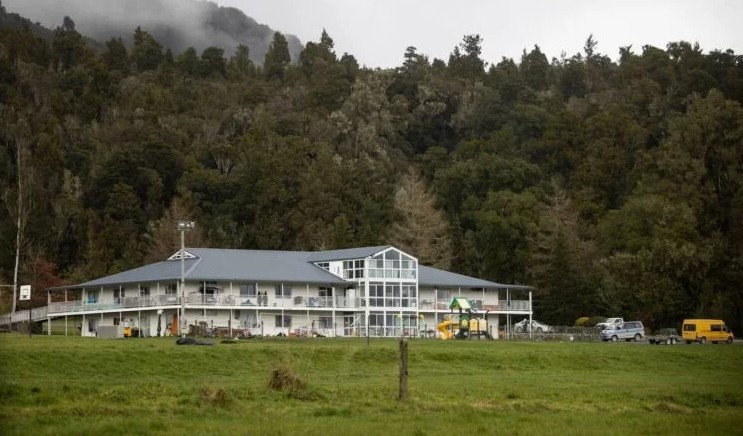
Children’s Commissioner Jane Searle says the safety, wellbeing and rights of children must now drive every decision following confirmation that Gloriavale Christian School’s registration will be cancelled. Searle has backed the decision following fresh findings about the physical and emotional safety of children at the school, saying children growing up within the isolated West Coast…
Children’s Commissioner Jane Searle says the safety, wellbeing and rights of children must now drive every decision following confirmation that Gloriavale Christian School’s registration will be cancelled.
Searle has backed the decision following fresh findings about the physical and emotional safety of children at the school, saying children growing up within the isolated West Coast community are entitled to the same quality of education, protection and opportunities as every other child in Aotearoa.
Her focus is now shifting to what happens next.
With the closure set to disrupt the schooling and daily lives of children and their families, Searle says government agencies must ensure the transition is carefully managed rather than simply closing the school and expecting families to navigate the consequences alone.
Safety and wellbeing must come first
The Commissioner says every child has the right to an education that enables them to learn, develop and reach their potential.
That right does not change because a child lives within Gloriavale.
Searle’s support for the cancellation centres on the latest concerns about physical and emotional safety.
The Ministry has previously been involved in a lengthy compliance process with Gloriavale Christian School. Documents released under the Official Information Act show that as far back as December 2023, the school was described as being at a crossroads and warned that failure to fully develop and implement a compliance plan could ultimately lead to deregistration and closure.
The latest decision therefore comes against a background of longstanding regulatory scrutiny rather than as an isolated intervention.
Closing the school is only the beginning
For Searle, cancelling the registration cannot be the end of the Government’s responsibility.
Children still need to go to school.
They need continuity in their learning.
Families need to understand what alternatives are available.
And children who may already be dealing with significant uncertainty need stability rather than another source of disruption.
The Commissioner’s office has been briefed by the Ministry of Education on work underway to support Gloriavale children.
Searle says individual children and families will need carefully managed transition plans, practical assistance and wraparound support as alternative education arrangements are developed.
That could become particularly important given Gloriavale’s isolated location and the distinctive circumstances in which children within the community have been raised.
The children cannot carry the consequences
The central principle should be straightforward: whatever failures led to the cancellation of the school’s registration, the children themselves should not be made to pay the price.
They did not design the education system around them.
They did not create the regulatory problems.
And they should not be left without appropriate education or support because adults and institutions failed to meet required standards.
The challenge for agencies is therefore to separate accountability for the school from responsibility for the children.
That means ensuring every affected child has a viable educational pathway.
A significant period of change
Changing schools can be difficult for any child.
For children educated within a relatively closed community, the transition could be considerably more complicated.
New teachers, different curriculum environments, unfamiliar classmates and increased contact with people outside their existing community could represent substantial change.
Some children may adapt quickly.
Others may need considerable support.
Searle’s call for wraparound assistance recognises that education cannot be considered separately from emotional wellbeing and family stability.
Decisions made now could shape how successfully children move through the next stage of their education.
Children have rights wherever they live
The Gloriavale decision also raises a wider principle about the responsibilities of the state.
Parents and communities have considerable freedom in how they raise and educate their children.
Religious communities are entitled to maintain their beliefs and identity.
But those freedoms exist alongside the rights of children themselves.
Children have rights to safety, education, development and protection regardless of their parents’ religion, community or geographical isolation.
The Commissioner is making clear that children living at Gloriavale cannot be treated as an exception.
Regulatory responsibility has just changed
The decision also comes during a significant change in the way private schools are regulated.
From September 1, 2026, responsibility for registering private schools and associated regulatory activities transferred from the Ministry of Education to the Education Review Office as part of wider education system reforms. The Ministry retains responsibility for areas including policy, funding and curriculum.
That makes effective coordination between agencies particularly important as the Gloriavale situation moves from a regulatory decision into the practical challenge of supporting affected students.
The machinery of government may have changed, but for children and families the question is much simpler — where will they learn, who will support them and how quickly can certainty be provided?
Listen to the children themselves
There is another voice that needs to remain central throughout the transition: the children.
Child-centred decision-making means more than adults deciding what they believe is best.
Where appropriate for their age and circumstances, children should be given understandable information about what is happening and opportunities to express their views about decisions affecting them.
Their voices will not necessarily determine every outcome.
But they should not disappear from a process supposedly being undertaken for their protection.
That principle applies well beyond Gloriavale.
Whether decisions involve schools, state care, health, justice or social services, children should be recognised as people with rights and perspectives of their own.
The real test comes next
Cancelling a school’s registration is a significant regulatory action.
But the success of the intervention will ultimately be measured by what happens to the children afterwards.
If they move into safe, stable education environments, remain engaged in learning and receive the support necessary to navigate the transition, the decision can become an opportunity for better outcomes.
If children fall between agencies, lose access to education or experience further instability, simply closing the school will not have solved the underlying problem.
That is why Searle’s intervention matters.
The registration decision may have been about Gloriavale Christian School, but the next decisions must be about the children.
Their safety must come first.
Their education must continue.
Their voices must be heard.
And throughout what could be one of the biggest changes of their young lives, their wellbeing must remain the priority.