

Trapped in an unsafe school? Inside the warnings behind the Government’s Gloriavale School closure order
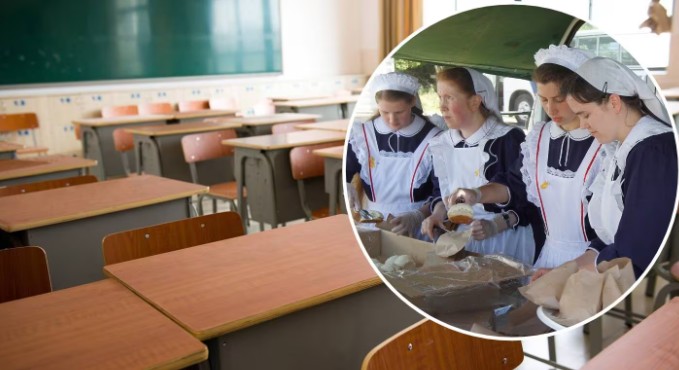
Gloriavale Christian School skipped police vetting for staff, and employed people with “convictions unsuitable for work with children”, according to senior education officials.
Students who had displayed dangerous behaviour were also allowed access to other children, the Education Review Office (ERO) says.
And until at least October, when the matter will be the subject of a High Court hearing, about 100 children will remain in the school.
In December, after multiple warnings, the Government ordered the closure of the private school inside the religious sect on the South Island’s West Coast.
Secretary for Education Ellen MacGregor-Reid said education bosses had ongoing concerns about the physical and emotional safety of the children.
There was “no evidence to suggest that providing further time will ensure the school will become compliant”, she said.
The school’s board immediately described the closure order as “unjust” and sought a judicial review in the High Court – which granted an interim order to allow the school to stay open.
That means about 100 children remain in the school that the Government has deemed unsafe.
As the Gloriavale school board prepares to fight for its future, the ERO and Ministry of Education (MoE) have released some of their communications with Gloriavale to the Herald under the Official Information Act.
The tranche of documents includes correspondence from ERO to the ministry alleging the school “knowingly employed staff with prior convictions unsuitable for work with children”.
A December briefing to the ministry alleged the school “in at least one instance failed to act when behaviours placing students at risk were identified”.
The briefing claimed safety policies were “inconsistently applied … child-centred decision making is weak and monitoring insufficient”.
It also noted the school didn’t keep a register of who had completed police vetting, and failed to vet some part-time adult employees and volunteers.
It said some homeschooled students who were the subject of “safety action plans” – designed for students who might exhibit behaviours that may cause harm to themselves or others – regularly accessed the school, where other children were.
The plans say those students should be supervised at all times.
The documents don’t reveal whether or not those students were supervised, but the Ministry and ERO were concerned.
The ERO document noted those visits had occurred “often unpredictably”.
The correspondence also identified there was no system to track children moving in and out of the school.
“This lack of clear accountability and monitoring creates significant safety risk,” it said.
ERO acting chief executive Ruth Shinoda wrote the school didn’t meet registration criteria, adding their decision “reflects persistent non-compliance and systemic weaknesses in governance, safety and educational provision.
“Furthermore, ERO has no confidence that the school can make the necessary improvements in a timely manner, given its history of unsafe practices and lack of sustained progress.”
Other red flags raised included that enrolled students with “high and complex needs” weren’t able to attend school at all, as it lacked the equipment to support their physical needs.
Teachers also didn’t “sufficiently demonstrate commitment” to the Code of Professional Responsibility and Standards for the teaching profession.
Reviews of the curriculum offered to Gloriavale students had “highlighted serious weaknesses in implementation”.
In a written statement to the Herald, the school’s board said it disputed aspects of the MoE and ERO assessments of its school.
It said it had formally engaged with the ministry, and had sought specific details about the claim the school had knowingly employed staff with convictions unsuitable for work with children.
“However, despite repeated requests to the Ministry of Education, the individual(s) referred to has not been identified to us,” the statement said.
“The board has not knowingly employed staff with convictions unsuitable for work with children.”
The board said that was one of the reasons it believed the decision to cancel the school’s registration was “flawed” and court action required.
“In relation to other matters raised, the school does not agree with the assessments of ERO, and the Ministry of Education,” the board said.
“The school is committed to ensuring that all regulatory requirements are met and that the wellbeing and safety of students is upheld at all times.
“The school has provided a detailed response to its concerns with the process adopted by the Ministry of Education.”
The matter will return to the High Court in October for a scheduled three-day hearing.
Census NZ statistics have revealed there are about 220 school-aged children who live at Gloriavale.
About half are homeschooled, an estimated 40% attend the private school and the remainder are correspondence school students.