

Day 1: What happened in the recent Employment Court Judicial Review for MBIE?
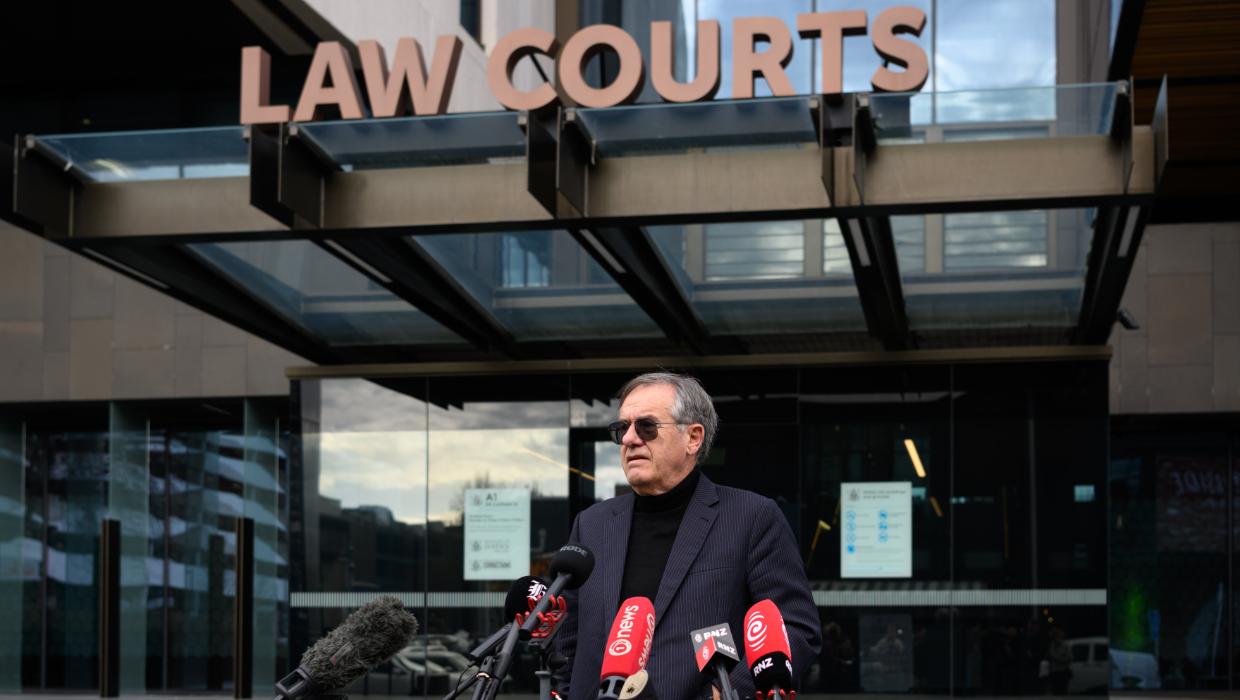
This post sets out the background to the recent Employment Court hearing 16 – 18th March 2026 where Gloriavale Leavers’ lawyer Brian Henry requested the MBIE reports from 2017 and 2021 (around the issue of employment status for Gloriavale members) be quashed as they amounted to an error of law and process, and were unreasonable. Court Notes start at Part B of this post.
Part A: Background to this Court Hearing (compiled by Liz Gregory)
For the detailed background to the employment issues and resulting litigation relating to Gloriavale you may like to read here: Courage (Boys) and here for the Pilgrim (Girls) Employment Case.
Leavers had raised concerns about labour practices in Gloriavale across decades. After more media attention in 2014/2015, a Charities Investigation was conducted. Report can be read here. They found concerning practices of alleged child labour and exploitation (among other serious allegations). They passed their concerns to the Labour Inspectorate (LI) which is part of MBIE the Ministry of Business and Innovation).
In 2017 the LI conducted a Desktop Review. They didn’t interview anyone and relied only on information given to the them by Charities Services. You can read that report here.
They had determined on the papers that the workers at Gloriavale were not employees and that they could not deal with any matters of concern as it was not within their jurisdiction. The report was buried.
But leavers and people inside Gloriavale did not know about this review. It was unearthed during 2020 when more leavers and two current members came forward again to the media alleging worker exploitation. Media inquired, asked questions of the Member of Parliament in charge of Workplace Relations, and the Desktop Report of 2017 surfaced. The Labour Inspectorate responded saying they wouldn’t investigate because they had already found they were volunteers. That evening MP Andrew Little ordered a major review of the report saying “I cannot be sure as Minister that workers at Gloriavale are not being exploited and I want to be sure of that,”
During 2020 pressure mounted on MBIE to conduct a full investigation and interviews with former and current members followed in 2021. However, the Labour Inspectorate stuck to their original conclusion, finding that on balance they were not employees. They were something else out of their jurisdiction – (Liz note: their only other choices were volunteers, or self-employed partners)
Leavers were unhappy and their lawyer Brian Henry moved quickly to file employment court proceedings against the LI (MBIE) through the Attorney General for their failure to recognise workplace exploitation and provide protections to those inside Gloriavale. They also filed the proceedings against Gloriavale themselves, for their failures to keep NZ labour standards.
Two proceedings were filed. One for the Boys (Courage case) for their work in revenue earning businesses, and one for the Girls (Pilgrim) for their “work” in the domestic side of Gloriavale’s life (cooking, cleaning, laundry etc).
2022 & 2023 Employment Court Hearings and Appeal
Throughout 2022 and 2023 Gloriavale and its way of life was minutely analysed across the TV screens and newspapers of New Zealand. In both cases the judge ruled that the boys and girls WERE employees, and had not been given the suite of employment protections they were entitled to. (Liz note: The judge used the word slavery in the Courage judgment and harshly condemned the LI for their failure to protect the most vulnerable.)
Gloriavale did not appeal the Courage decision, but did appeal the Pilgrim decision and that was heard in court during October 2025. The judgment has not yet been released.
Since then there have been a series of hearings to complete the case. In Dec 2023 and Nov 2024 she ruled that in the both the boys and girls cases the Overseeing Shepherd as a person and in his role was the employer. Since then she has also heard from the lawyers on whether the 6-year time bar is relevant (still awaiting judgement), and after that she will get to work on the remuneration side of thing. How much money might the plaintiffs might be owed?
Slavery and servitude enter the scene
After the court proceedings. NZ Police opened an active investigation into slavery, servitude and forced labour in Gloriavale. That investigation is ongoing and by April 2026 there have been no charges laid.
Judicial Review
Lawyer for Gloriavale leavers, Brian Henry, requested a judicial review to quash the original two LI reports from 2017 and 2021, stating he believed there had been an error of law because they failed to properly investigate the factual circumstances and that the decision was unreasonable. (Liz note: you can’t just apply for a judicial review on the grounds you simply don’t like the outcome. You usually have to find fault with the process or find a misapplication of the law).
He believes that the Government should not allow those reports to stand and there needs to be an official removal of them from the record.
He is also seeking a remedy by ways of financial compensation for the victims. (Liz note: This part of the argument will be heard in a further hearing if the first part succeeds)
The notes below relate to the recent hearing for the judicial review.
________________________________________________________________________________________________________________
Part B Court Notes Summary
16 – 18 March 2025 – Judicial Review Hearing, Christchurch
Liz Gregory from the Gloriavale Leavers’ Support Trust (GLST) attended the three-day hearing and took notes to inform leavers and other interested parties on the progress of the case. Below are the main arguments of the parties:
Judge: Christina Inglis
Counsel Assist: Robert Kirkness
Counsel for 1st Defendant the Crown/NZ Govt (Attorney General and MBIE Labour Inspectors): Ms Aedeen Boadita-Cormican and Ms Warren,
Counsel for 2nd Defendants (Gloriavale): Carter Pearce Counsel for Applicants: Brian Henry, Stephen Patterson, Kadri Elcoat
Day One March 16 – Brian Henry – lawyer for Gloriavale Leavers – Key Points
Brian raised several key issues:
Investigation Failures
The applicants argued the Labour Inspectorate:
- relied too heavily on documents rather than lived reality
- failed to properly examine the power and control imbalance in the community.
- dismissed testimony from former members
- decided early on they would not interview under 18’s in the community
- came to unreasonable conclusions that amounted to an error of law
1. Reliance on Legal Documents and Shams
The Inspectorate relied too strongly on documents such as:
- Partnership Agreements
- Declarations of Commitment
- What We Believe (WWB) Foundational documents for Gloriavale’s spiritual and practical life (the rules written down)
Brian argued these documents should not be taken at face value, because they operate within a system where members must submit to religious authority.
He said every document is inter-related and it starts with the power of the Overseeing Shepherd under What We Believe (WWB) which controls everything.
He said they were put together by “senior and experienced lawyers” who created structures to show the illusion of a partnership… “and the Labour Inspectorate fell into the illusion”.
He made a point of mentioning Gloriavale’s lawyers Duncan and Cotterill multiple times during the day.
He argued the partnership structure is “a sham” designed to avoid employment law obligations. He believed the Labour Inspectorate should have examined the documents and seen them for what they were very easily.
Interestingly enough he also pointed out that during the 2021 investigation, Hannah Mills (an Inspector) wrote in her notebook during the visit about the partnership and the way money was going in and out, “It’s a sham to show people are being paid.” but this wasn’t reflected in the final report.
“The cashflows were completely inconsistent with a Partnership – and the Labour Inspectorate recognised it and she called it a sham.”
Brian also reminded the judge that in her Courage judgement she wrote, “Loud alarm bells should be ringing even at a cursory glance of What We Believe…”
2. Power and Control
His central argument was that Gloriavale operates under extreme power and control by community leaders.
Evidence cited included:
- the doctrine of What We Believe (WWB) requiring obedience
- shepherd authority over members’ lives
- communal ownership of income and assets
- members having little ability to negotiate or refuse arrangements.
Brian argued that workers in such a system, under power and control dynamics cannot freely enter a partnership or volunteer arrangement.
A situation where one party has total control and others must obey is not consistent with a partnership. Also a situation where all the assets effectively get pooled and distributed back to the Overseeing Shepherd (who holds ultimate authority for everything) cannot be called a partnership.
He said all these elements “negate a partnership. It’s a sham. An absolute sham. Partnership drawings is a sham.”
3. Dismissed Testimony from former members
Brian said that the Labour Inspectorates comments in the 2017 report that the leavers were a self-selecting group and may be a bias sample because they were disaffected after leaving Gloriavale, was a “staggering conclusion for a civil servant to reach.”
“They were entrapped in what is a slave camp. These were victims finding their voices after finding freedom – rather than a vindictive vendetta against their employer.”
He said in the 2017 report they just relied on quotes from the DIA Investigation (Charities Services) and never spoke to anyone. But these quotes affirmed there were serious issues that needed examining.
While in the 2021 investigation they had ample credible testimony including letters. He said this was “hugely concerning” and referred to a letter the Labour Inspectorate received from a former member that showed the nature of the community – including “violent enslavement of those providing and doing the work.”
4. Decided not to interview under 18’s in 2021.
Prior to the 2020/2021 site visits, a decision was made by the Labour Inspectorate that they would not be interviewing under 18’s. They decided that it would be too difficult in a group like Gloriavale, they would need parental consent and even if they found breaches, it would be something for another Department to deal with (Child, Youth and Family/ Oranga Tamariki).
Brian reminded the judge that the Act protects people “at all ages”. He stated that the Labour Inspectorate clearly didn’t recognise they had obligations for employees of all ages.
It was argued that the reports ignored evidence suggesting exploitation and lack of genuine consent.
Brian argued that their reasoning in not proceeding twice to a full inquiry was entirely inadequate.
“They ignored allegations of serious child labour, and it was inadequate to say it was a difficulty to look at the under 18 year olds. Just because they didn’t see them doesn’t mean it wasn’t happening. We heard evidence young men were hidden.”
5. Lack of Genuine Independent Legal Advice
During the 2017 report, it was clear that Labour Inspectorate was aware of allegation of mass signing of documents under duress. So Gloriavale tidied up their act and organised “independent lawyers” to come to the community and give advice about the Partnership.
2021 report, the reports suggested members signed agreements after receiving independent legal advice.
Brian argued this advice was not truly independent because:
- lawyers were arranged and paid for by community leadership
- members were under religious influence and social pressure
- many members had limited education and little exposure to external advice.
- leavers had shared with the Labour Inspectorate their concerns around the advice they received. (It was rushed, pressured, had leaders standing outside the door etc)
“The Partnership agreement required signature of the Commitment Vow and required independent advice, but paid for and instructed by the Overseeing Shepherd and under undue influence”
Brian said, “The independent legal advice was a mockery”
“They (the LI) knew it but dismissed the victims retraumatising their plight.”
6. Volunteers, Self-Employment or Slaves?
The reports suggested members might be:
- volunteers
- self-employed partners.
Brian argued neither classification fits the facts, because members:
- work under direction
- do not control profits
- receive food, housing, and necessities in return for labour
- have limited ability to refuse work.
- they fail the self-employed control tests
Brian said “the volunteer claim is nonsense. A volunteer must be an equal when coming to the work. There must be no compulsion, it’s their own volition to freely help.
He said the doctrine of unity and submission removes this capacity.
“The Overseeing Shepherd says they’re volunteers, but disciplines them. “It’s a preordained structure designed to create an illusion.”
Brian said because they weren’t volunteers or self-employed, their only other option was employee.
However, the judge jumped in and asked,
“Isn’t the other alternative slaves?”
Brian agreed with the judge and reminded her that in the Courage case judgement she stated that slaves do fall under employment protections.
7. Crown Law Advice
The 2021 report stated, “Advice received from Crown Law supports the views that members of the Gloriavale community cannot presently be considered to be employees.”
(Liz note: Crown Law are the Government’s lawyers. They don’t make decisions on anything contentious without receiving advice from their own lawyers. Legal advice is usually privileged, but Brian fought through the courts during 2025 to have the advice released so it could be examined by this court. He won and Crown Law had to hand it over.)
On scrutiny of the advice it showed that Crown Law had advised the LI that “The employment court would be willing to scrutinise whether the statement of the intent was a legal fiction” (Referring to the intent of the parties when signing the Partnership).
The LI choose not to go down that path. Brian contends that is where they have made an error in law and process.
Brian stated the Crown Law advice was also flawed in many ways. Crown Law stated that “members appear to receive a reasonable standard of living, and equality and don’t seem to be exploited for the benefit of the leaders”.
Brian questioned what they thought they meant by the “benefit of the leaders”, noting various convictions for abuse, and also pointed out the people were under unity and submission and weren’t allowed to think. They signed under threats, undue influence and oppression.
Finally Crown Law wrote,
“The court may be less likely to investigate these matters when entangled with ecclesiastical beliefs”
In other words because these issues relate to matters of religious beliefs, the courts might be reluctant to deal with the issues.
Brian reminded the court,
“How can children in a community, ill-educated, unworldly, utterly ill equipped to deal with it, have a free choice?”
“You can not leave without jeopardising their eternal soul.”
Crown Law actually acknowledges in their advice,
“It is hard to see a more potent threat than eternal damnation.”
And yet the LI failed to investigate further. Brian summed up the Crown advice as contradictory and wrong.
8. Came to unreasonable conclusions amounting to an error of law:
Brian noted that the Labour Inspectorate were informed by Charities Services in the 2015 report that there were allegations of possible employment and labour breaches including excessive work hours, no holiday pay, insufficient maternity, leave, children and teens working, below minimum wage, no record keeping, etc. To find they weren’t employees was unreasonable.
Richard Lewis, author of the 2017 Desktop Review and the 2021 report had noted that the stark differences between the two narratives of current and former members may have been put down to bias from those who had left Gloriavale. Brian said this cannot be dismissed as bias.
The Labour Inspectorate also acknowledged in both reports that there were serious issues that needed to be examined, however, they fell outside of the LI jurisdiction.
They Labour Inspectorate themselves wrote,
“The numbers, scale and seriousness of the breaches is nly worth traversing in details if they are deemed to be employees.”
“Consideration must be given to the possibility of a charge of exploitation.”
And yet ultimately they claimed it was not in their jurisdiction and no further action was required.
Final Summary
Brian noted that the Labour Inspectorate were informed by Charities Services in the 2015 report that there were allegations of alleging possible employment and labour breaches including excessive work hours, no holiday pay, insufficient maternity, leave, children and teens working, below minimum wage, no record keeping, etc
“The volunteer claim is nonsense”
“Their position was no free will, brutally enforced and the Labour Inspectorate knew this.”
“How did they produce the report they produced?”
“Their only hope was the LI to deal with the issues.”
“It should have gone to court”
“Each report was made contrary to law and should be squashed”
For more information about Day One, please read newspaper articles by RNZ and Stuff:
Day Two (The Government Responds) and Day Three (the Judge’s Counsel Repsonse) will be summarised in Blog Post Part 2 and 3