

Homeschool saga: ERO warned Education Minister Erica Stanford months before Tom Phillips revelation
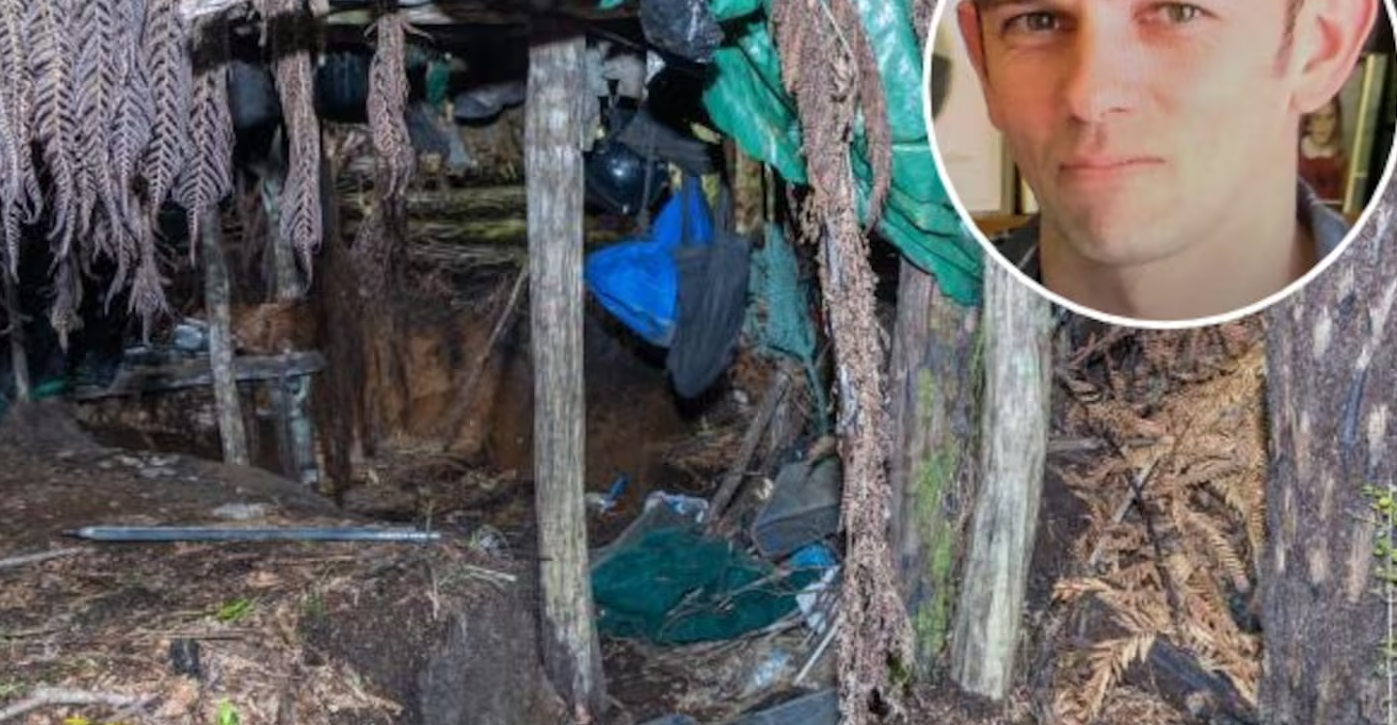
Six months before the Herald revealed that fugitive dad Tom Phillips was a Ministry-approved homeschooling parent, the Education Review Office warned Education Minister Erica Stanford in a confidential report that homeschooled children in New Zealand had inadequate oversight. Yet nothing was doneand the only immediate change following this week’s public inquiry into the disappearance of the Phillips children will be a mandatory check for either parent’s objections in the homeschooling application process, starting 2027. National desk editor Hannah Brown reports.
Last November the Education Review Office shared serious concerns about homeschooling in New Zealand with Education Minister Erica Stanford. Its confidential report warned that children could disappear from the system – or even the country – unnoticed, and that New Zealand’s 11,000 homeschooled children “may be missing out on the quality education that they should be entitled to.”
The briefing to Stanford, titled Education Review Office: Homeschooling background and operational observations was broadly critical. (You can read it, released under the Official Information Act and embedded in full below.)
“ERO is concerned that most homeschooling arrangements are not monitored or reviewed,” it said. “The quality of the education most homeschooled children receive is going unchecked.
“No one collects data about the progress of homeschooled students. Assessment data that provides clear indications of student progress are key measures for maintaining oversight of quality education.”
Homeschooled children in New Zealand are not required to follow the national curriculum, or do NCEA – or be externally assessed.
The briefing described a homeschooling system so loose, that children could potentially disappear forever, unnoticed.
“Parents and students can move anywhere around the country or overseas without the system being aware or able to check.”
When approached this week and asked why no systemic changes had been made 10 months later, Stanford told the Herald “urgent work is needed” and that she is introducing mandatory checks for parental objections in the homeschooling application process that will come into effect by early 2027. (Her full response is at the bottom of this story.)
Anyone can homeschool their children in New Zealand – if they can convince the Ministry of Education that they can teach their children “as regularly and as well” as qualified teachers at a registered school.
Homeschoolers in New Zealand obtain a certificate of exemption from school when their child turns six, by filling in an online application on the ministry website. These certificates remain valid “in perpetuity” until children reach 16 years old and can leave the education system.
Education officials don’t meet or visit prospective homeschoolers to assess their safety and effectiveness as educators, and most homeschooled children never receive a check or visit.
The briefing to Stanford also pointed out that by granting exemptions in perpetuity to six-year-olds, “there is no visibility of how the curriculum … is changing to meet the needs of the learner through the years.”
It also raised questions about parents’ abilities to teach children adequately as they grew older and capable of learning at more advanced levels.
“Even qualified teachers are not always confident teaching more complex areas of maths,” it said.
Tom Phillips: Second generation homeschooler
Six months later, the Herald revealed in May that the Ministry of Education awarded Marokopa father Tom Phillips full permission to homeschool his three children prior to their disappearance.
As usual with homeschool applications, no ministry officials visited Phillips to assess his suitability as a home educator, instead relying on his written assurances.
“All three of the Phillips children had valid certificates of exemption for home education … applied for by their legal guardian, Tom Phillips” Marcus Freke, the director of education for Waikato, confirmed in a statement to the Herald in May.
Tom Phillips disappeared with his three children – then aged 5, 7 and 8 – in December 2021, isolating them from society, family and peers for nearly four years in dense Waikato bush.
During that time, he defied a court order and engaged in bank robbery and stealing vehicles, before being shot dead in front of his daughter in an altercation with police, during which he critically injured an officer.
Homeschooling was a family tradition: Tom Phillips himself was partially homeschooled as a young boy on the same Marokopa farm before later attending exclusive private boarding school St Paul’s Collegiate.
To be approved as his children’s teacher, Phillips would have completed a short application per child, downloaded from the ministry’s website, explaining his educational plans.
On approval, Phillips would have become eligible for an annual allowance of $2030 – the rate for three children.
Under the current homeschool system it’s highly unlikely the Phillips children would ever have been checked or reviewed again.
“You’d have to be worried”
Homeschooling rates in New Zealand are at a record high. The numbers have nearly doubled since 2017 – and continued to climb post-Covid.
In July 2025, New Zealand had 11,010 homeschooled children across 6518 families – that’s roughly the same number of students as our three largest state schools combined: Rangitoto College, Mt Albert Grammar School, and Maclean’s College.
That’s 1.3% of New Zealand’s children receiving their schooling at home yet there is no monitoring of their education – or whether they are receiving education at all.
While the Ministry of Education grants the exemptions, the Education Review Office (ERO) has the power to visit and review homeschooling families. It used to do about 500 of these checks per year.
But funding for reviews was cut in 2009 under then-Prime Minister John Key and Education Minister Anne Tolley, and ERO now carries out just 10-12 home checks nationwide per year.
In its November briefing to Stanford, ERO highlighted this.
“ERO is concerned that most homeschooling arrangements are not monitored or reviewed. When reviews do occur, they are often … triggered by parental conflict or suspected wellbeing concerns. This means the quality of the education most homeschooled children receive is going unchecked.”
Exclusive figures released to the Herald under the Official Information Act reveal that 60 homeschooled children had reports of concern made about them to Oranga Tamariki (OT) in the year to July 2025.
Following investigations by OT, 23 of those reports of concern were substantiated.
Nine of the children were found to have suffered physical abuse, five had been sexually abused, seven were neglected, fourteen had suffered emotional abuse and fourteen had experienced behaviour or relationship difficulties.
Professor Stuart McNaughton from the University of Auckland’s faculty of education told the Herald in May “you’d have to be worried” if ERO wasn’t monitoring homeschool education.
McNaughton was formerly the government’s chief education scientific adviser.
“How is the well-being of our children who are being homeschooled? Are these kids developing appropriately? That means learning the content – but also gaining social and emotional skills for life.
“I’ve never seen a systematic evaluation of homeschooling in New Zealand. If I had to guess, I’d say there would be huge variation in educational quality – from excellence all the way down.
“Without regular and representative ERO visits, we just don’t know.”
Backlash: “Underhanded and undemocratic”
May was a turbulent month for homeschooling families in New Zealand.
On May 14 the Herald revealed that Tom Phillips had been a Ministry-approved homeschooling parent.
Four days later Stanford introduced late and unexpected amendments to the Education and Training (System Reform) Amendment Bill – aimed at strengthening oversight of home education – after the Bill had already passed its second reading in parliament.
The proposed changes were quickly labelled “underhanded and undemocratic” by the national homeschooling body.
National Council of Home Educators NZ government liaison Cynthia Hancox told the Herald at the time “This has been introduced with no warning, no consultation with the home education sector despite attempts to meet with the minister and the ministry.”
A few days later on 27 May Stanford dumped her plans after powerful backlash from homeschooling parents.
“There were additional complexities we hadn’t anticipated” she said, while maintaining issues continued to exist in the homeschooling sector, which she described as having a “very high trust model”.
“When we approve an application for someone to do homeschooling, we may well never see them again unless a concern is raised, which means that essentially there is extraordinarily limited oversight of the sector that is in contradiction to all of the countries we compare ourselves to.”
That same week, a highly critical ERO special review of homeschooling at Gloriavale was released. (You can read it, embedded in full below.)
It related to the education of about 100 children at Gloriavale who – instead of going to Gloriavale Christian School – had ministry certificates to be homeschooled.
The review called their curriculum “limited in breadth and depth” and concluded children were living and learning in overcrowded and unsafe conditions – many without ready access to water and toilets.
“Learning provision often did not demonstrate sufficient regularity, frequency or consistency to support sustained learning.
“ERO observed low levels of oral language development and weak writing skills” among younger students.
It found that “none were achieving at expected levels in a way that could be reliably measured”.
For 96 of the children checked, ERO concluded their parents were not meeting their legal requirements to educate their children adequately.
The Herald asked the Ministry of Education this week – now that some months have passed – how those children are now being educated, and what the plan is for their schooling in future.
The Ministry confirmed the children’s homeschooling certificates were not revoked, and responded in a statement.
“The Ministry of Education’s continued priority has been to ensure that home education within the Gloriavale community complies with legislative requirements.
“Our regional team is currently engaging with home education families to check that planning processes and quality educational programmes are in place.
“We continue to keep families informed about other options available to them.”
“Families need freedom to educate differently”
What do homeschooling families think? There’s a spectrum of opinions, Hancox told the Herald.
“Some home educators are quite comfortable with some form of added accountability. Others hold different views.
“What we’re opposed to is accountability becoming a back door to controlling how families educate their children.”
Hancox said home educators want the government to understand that families need the freedom to educate differently from the way schools do it.
The approaches of homeschooling families in New Zealand range from the highly structured to the less structured, the child-led – and the unschooling movement.
“New Zealand has something quite unusual in its home education framework: families have considerable freedom to tailor education to their children.
“That freedom is one of the reasons home education works for children who haven’t thrived in conventional schooling.
“If the Government believes the system needs greater assurance, let’s have an evidence-based conversation about what problem we’re actually trying to solve.
“And then let’s design the minimum, most proportionate intervention that addresses that.
“Feedback from families is the Ministry must not gradually turn accountability into requirements to follow the curriculum, meet standardised benchmarks or demonstrate that children are at the same point as school-aged peers. Progress and achievement must be understood in the context of an individual child’s abilities and learning needs.”
Hancox told the Herald the community is particularly averse to compulsory routine home visits, any AI assessment, standardised testing, compulsory curriculum and accountability that could become a punitive pass/fail process – where officials decide whether a family is allowed to continue homeschooling.
“Perhaps the biggest complexity is that you can’t change accountability without also deciding what counts as evidence of effective home education, who gets to make that judgement, and what happens when the Government’s conception of effective education differs from the family’s” Hancox said.
Stanford responds: “Change by 2027″
This week, the Herald asked Stanford why she didn’t seek changes to homeschooling rules until May 2026, after it was revealed Tom Phillips was a certified homeschooler.
We also asked for her view on the fact 96 homeschooled children not being educated adequately have not had their certificates revoked. Here is her response.
“In late 2025, the Education Review Office wrote to me with urgent concerns about homeschooling at Gloriavale. As a result, we acted immediately to include homeschooling in the Education Reform Bill through an amendment paper.
“Subsequent feedback from the home education sector and others showed the issue was more complex than first thought and that further work was needed.
“Work has continued; however, taking additional time means we can now include the recommendations from the Public Inquiry into the Disappearance of the Phillips Children and the review of homeschooling at Gloriavale in our work programme. The Phillips report was not available when work first began on improving homeschooling requirements.
“These reviews confirm that urgent work is needed to ensure the best interests of children are at the centre of decision-making and that their right to a quality education is protected.
“The Phillips report recommends that the Ministry of Education collect application information about parents proposing to home educate their child, so it can assess any safety and wellbeing concerns.
“It recommends that information be obtained from other agencies, such as Oranga Tamariki and the Police, about any wellbeing concerns, and that home educators be subject to regular reviews so education and wellbeing issues can be considered.
“I am acting immediately on recommendations that do not require legislative change, such as changing the application process to collect information from applicants so we can assess whether there are objections from either parent or guardian and determine whether there are any wellbeing concerns.
“These application process changes will be in place by early 2027.
“Children deserve a quality education and to be safe, whether they are learning at home or in a regular school setting. That is why we have been, and remain, committed to making changes.”